Microsoft is no longer treating AI as a standalone add-on. With Microsoft 365 E7, they’re making a much bigger bet: that AI, security and identity should be bought, governed and scaled as one platform.
That may sound like the natural next step, but for most SMBs, it’s not. The real issue is not what E7 includes. It’s whether SMB customers are actually ready for what Microsoft is packaging.
My view is straightforward: E7 is important, but not just as a new Microsoft SKU for MSPs to resell. It’s important because it reveals where Microsoft wants the market to go, and MSPs need to know when to move with that vision and, more importantly, when to protect customers from buying ahead of their maturity.What Microsoft 365 E7 really is
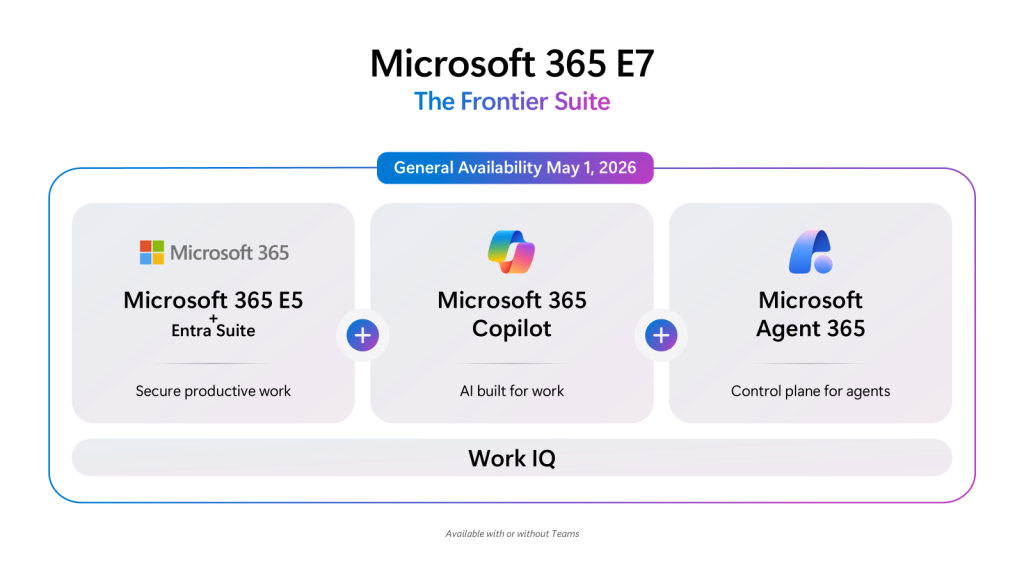
At a high level, Microsoft 365 E7 is Microsoft’s newest top-tier bundle that brings together:
- Microsoft 365 E5 with Entra Suite
- Microsoft Agent 365
All of this sits on top of what Microsoft refers to as “Work IQ,” which connects data, context and AI across an organization. The intent is clear: move organizations from experimenting with AI to operationalizing AI at scale, while keeping governance and security at the center.
How Microsoft 365 E7 compares to what you may already be reselling
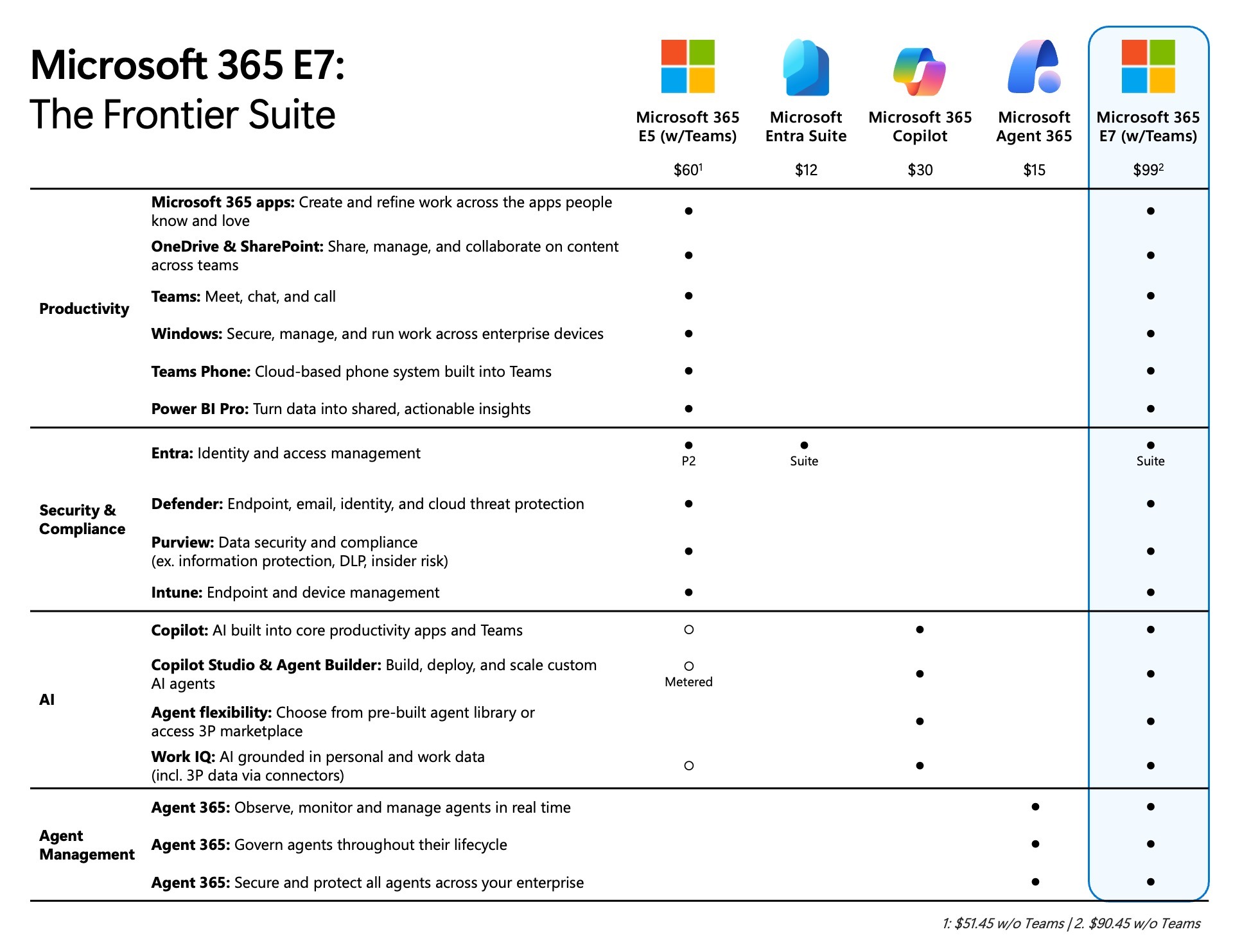
Looking at the full breakdown, E7 consolidates multiple components that many MSPs are already positioning separately today:
- Microsoft 365 E5 for productivity, security and compliance
- Copilot for AI-powered workflows
- Entra Suite for identity and access
- Agent 365 for governance of AI agents
This is why the E7 conversation should not begin with features or bundle economics. It should begin with customer maturity.
For SMB customers, E7 only becomes relevant when AI has been adopted, governance pressure is rising and platform standardization is becoming a business decision rather than a technical preference.
The reality for SMB customers
This is the part MSPs need to say out loud: E7 is not the right answer for the average SMB customer today. Saying that plainly is part of responsible partner leadership.
Across the SMB segment, most organizations are still:
- Early in their Copilot journey
- Assessing their security and compliance maturity
- Focused on controlling costs while exploring value
E7 brings real value, but only when a customer has reached the point where AI needs structure, governance and scale. Before that, it risks becoming another expensive layer of capability that looks strategic but goes underused.
When Microsoft 365 E7 does make sense
1) Customers already invested in Copilot
If a customer is actively using Copilot across multiple teams and is seeing tangible productivity improvements, E7 can simplify licensing and provide incremental value.
2) Governance is becoming a concern
As AI usage grows, the conversation changes. It moves from what AI can do to how it is controlled. E7 adds capabilities that support that shift through identity, security and agent governance.
3) Platform consolidation is a goal
Some customers are actively reducing the number of vendors they rely on. In these cases, E7 can support consolidation by bringing identity, security and AI into a single platform.
When Microsoft 365 E7 does not make sense
1) Early Copilot adoption
If a customer is still exploring Copilot, the additional capabilities in E7 are unlikely to deliver immediate value.
2) Cost-sensitive SMB environments
Even with bundled pricing, E7 represents a step up in spend. If adoption is low, it’s difficult to justify the increase.
3) No clear AI strategy
E7 is designed for execution. If a customer does not yet have defined AI use cases or ownership, it’s too early.
Final thoughts
Microsoft 365 E7 is more than a new bundle. It’s a signal of how Microsoft expects AI to be deployed in the future: as an integrated operating model tied to identity, security and governance.
But MSPs should not confuse Microsoft’s strategic direction with immediate customer need. Those are two very different things, and strong partners know the difference.
For most SMBs, the sequence is still the same: prove Copilot value first, then expand into governance and optimization. That’s the moment when E7 shifts from being interesting to being justified.
Want to learn more about Microsoft 365 E7?
If you’re speaking with SMB customers about E7 or trying to determine where it fits in your portfolio, feel free to reach out to our team. We’re happy to review real scenarios with you and help assess whether it’s the right recommendation for your customers.